You want to refresh your under-eye area, but which rejuvenation option is best? Should you go with dermal fillers for a quick fix, or is lower eyelid surgery a better long-term solution?
In this article, I’ll explain:
- How tear trough filler and lower eyelid blepharoplasty work to treat under-eye bags
- What results to expect, and
- Which is best for your anatomy, so you can make the most informed decision
At Elite Facial Plastic Surgery, we focus exclusively on facial procedures like lower eyelid blepharoplasty. I’m Dr. Dominic Castellano, a double board-certified facial plastic surgeon, and I’ve helped hundreds of patients like you restore a more refreshed, youthful look with custom treatments for the lower eyelid.
Want to wake up your under-eye area with natural-looking results? Schedule your consultation today and find out whether fillers or surgery is the best option for you.
And if you want to learn more about eyelid enhancement procedures, check out our video library. I have content where I specifically focus on lower lid blepharoplasty.
Why Your Under-Eye Area Looks Aged or Tired
So, what does aging look like in the under-eye area, also known as the tear trough?
The area we’re referring to is right below the lower lids, where the lower lid meets the cheek junction.
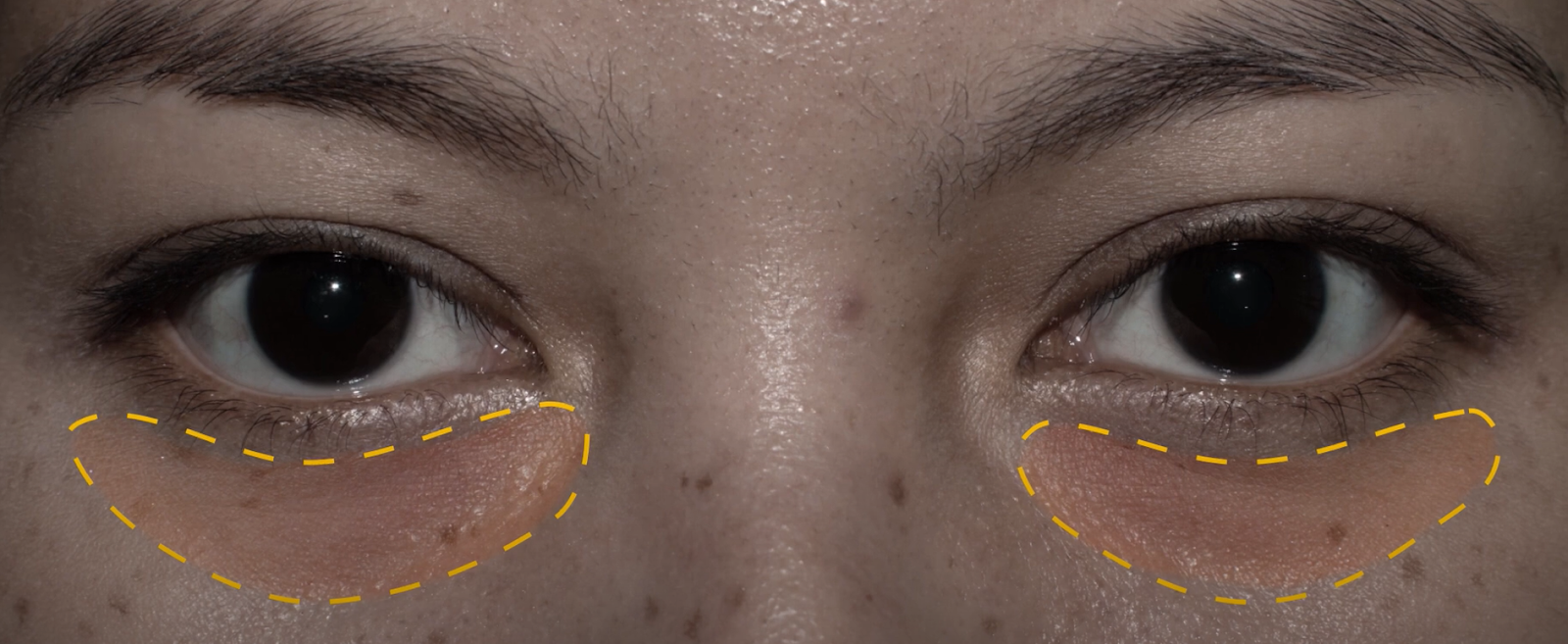
The anatomy of that area is a bit tricky, which is one reason why people can develop a “tired” appearance. In the area where the skin meets the lower lid junction, it thins out significantly.
There’s also a small ligament that adheres the skin to the bone at that junction, and that’s why it often starts to look aged as we get older.
Allergies or genetic factors can also cause swelling in this area, and this can lead to a darker color or discoloration under the eyes.
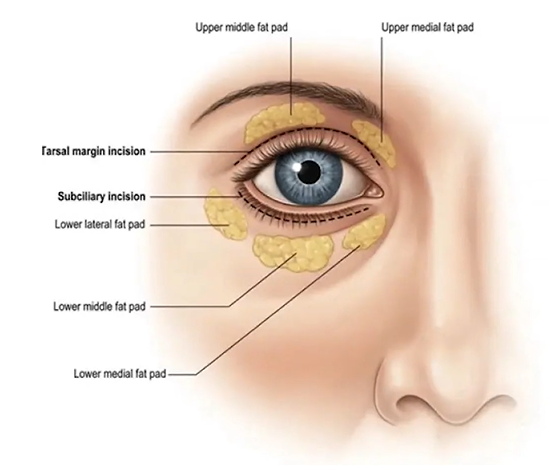
Additionally, as the lower lid ages, the support system weakens. The fat that surrounds the eye constantly presses on the lower lid, and starts to herniate forward. When this happens, it can lead to shadowing and contribute to that tired look.
Treating Under-Eye Hollows with Fillers
So, how do you treat the under-eye area?
The first, and non-invasive option, is using fillers to camouflage the depression under the eyes. This can be done, but treating this area with fillers can be a bit tricky.
The only fillers I would recommend using in this area are hyaluronic acid fillers like Juvederm. There are multiple brands available, but hyaluronic acid is the best option for a few reasons:
- If you don’t like the way it looks, it can be dissolved.
- The filler is more like a clear gel, and you can massage the area during and after treatment to flatten it out and make it look smoother.
When using fillers, make sure that whoever is doing your treatment has experience in this area and has the ability to dissolve the filler if needed.
I say it’s tricky because you’re essentially trying to smooth the skin over a ligament and bone junction. Technically, you’re not separating the skin, you’re just working to smooth out the trough, which is why it’s called the “tear trough.”
Risks & Side Effects of Under-Eye Fillers
If the wrong type of filler is used, something called the Tyndall effect can occur. This happens when the filler draws in fluid and gives the area a bluish hue or discoloration.
If this happens, my advice is to get the filler dissolved.
Lower Eyelid Blepharoplasty: Surgical Under-Eye Correction
So, how do you treat the lower lid area surgically?
As the lower lid skin starts to become lax, you develop wrinkles, and fat herniates forward, you may want a more permanent solution, and that’s when a lower lid blepharoplasty can be done.
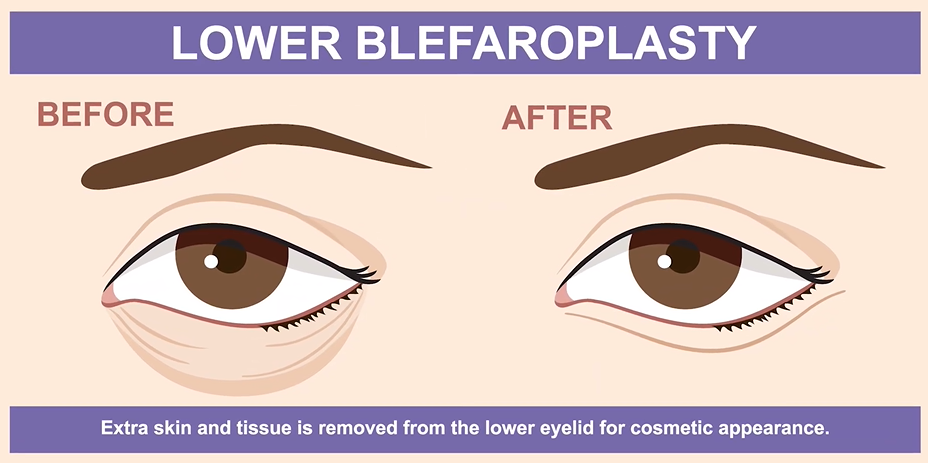
There are two ways to perform a lower lid blepharoplasty:
- Transcutaneous approach: An incision is made just below the lower lid, through the skin.
- Transconjunctival approach: An incision is made behind the lid, through the conjunctiva.
Both procedures have their pros and cons, but I’m going to focus on the transconjunctival approach, because this is my preferred method.
Why I Prefer the Transconjunctival Approach
With the transconjunctival approach, I can use bovie cautery or a laser. Personally, I prefer using a laser.
Here’s what I do during the procedure:
- I make an incision inside the lower eyelid, in the conjunctiva (the mucosal lining).
- Then I remove fat from the compartments around the eye to reduce the herniation that pushes the lid forward.
By reducing that pressure, I eliminate the bulging and the shadowing that causes the tired appearance on the lower lids.
The beauty of this procedure is that there’s no visible incision on the lower lid skin, and it doesn’t disrupt the lid’s support structure.
This method prevents problems like changing the shape of the eye and pulling the lower lid downward, which can sometimes occur with other methods.
Enhancing Surgical Results with Laser Resurfacing
The second component to treating signs of aging in the lower lid is to use laser resurfacing.
There are two main laser options:
- Erbium YAG laser resurfacing (this is my preferred method)
- CO2 laser resurfacing
By using a laser, we can:
- Address skin laxity
- Improve skin texture and appearance
- Complement fat removal
Fillers vs. Surgery: Which Is Right for You?
To recap, here are the pros and cons of each method for addressing under-eye bags:
Fillers
Pros:
- Non-surgical
- Minimal downtime
- Can be dissolved if needed
Cons:
- Can linger for months if not dissolves
- Requires maintenance treatments as the filler fades
Lower Lid Blepharoplasty
Pros:
- Provides longer-lasting results
- Reduces fat herniation
- Improves skin texture (especially when combined with laser resurfacing)
Cons:
- Surgical and requires anesthesia
- Longer recovery downtime
Deciding which procedure is right for you really depends on your goals. It’s best to discuss your options with the provider who will be performing your treatment.
Eliminate Under-Eye Bags with Elite Facial Plastic Surgery
If under-eye hollows, puffiness, or tired-looking eyes are affecting your confidence, Dr. Dominic Castellano can help. With advanced training in facial rejuvenation, he offers both tear trough filler and lower lid blepharoplasty to restore a smooth, refreshed appearance.
Book your consultation today. Let’s brighten your eyes and take years off your face.